
























From AI Summit Row to Assam Village: Teen Innovator Shows What Real Innovation Looks Like
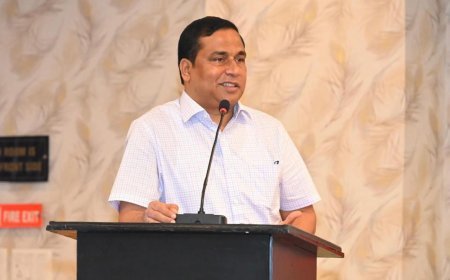
The recent controversy at an AI Summit, where a professor from Galgotias University claimed that a Chinese-made robodog named “Orion” was developed at the university’s Centre of Excellence, has triggered nationwide debate on authenticity in innovation. The claim, made to state-run broadcaster DD News, drew backlash after reports suggested that the robot was not originally developed by the institution.
The incident has once again raised questions about credibility, originality, and the need to truly support homegrown innovation.
Amid this controversy, a heartening story from rural Assam is restoring faith in genuine grassroots creativity.
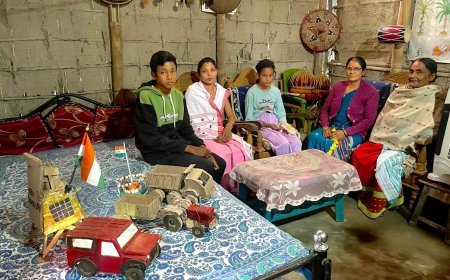
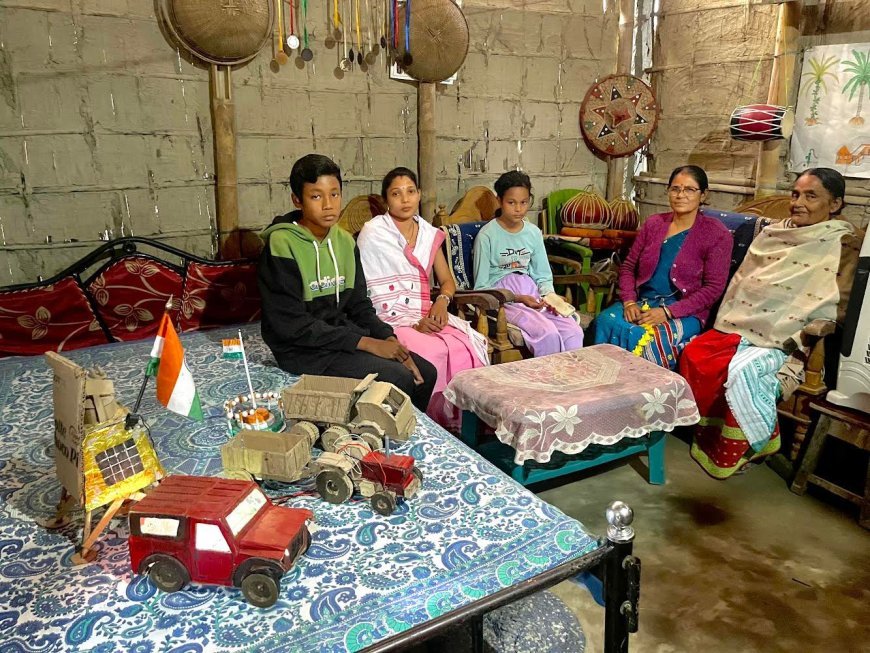
In Bajali district of Assam, 15-year-old Rahul Talukdar has drawn widespread admiration for building fully functional electric toy models using simple, locally available materials such as cardboard boxes and bamboo.
A Class 9 student of Swahid Akhendra Uccha Madhyamik Vidyalaya in Bajali, Rahul has created working electric models of Chandrayaan-3, along with miniature versions of a JCB, tractor, dumper, jeep, ship, camera stand, and several other vehicles. Each model reflects careful design, technical understanding, and remarkable attention to detail.
Coming from Doloi Gaon–Halgiri Ghat village, Rahul is the son of an e-rickshaw driver and belongs to a financially disadvantaged family. Despite limited resources, he has nurtured a deep interest in science and mechanics from an early age. Through self-learning, observation, and experimentation, he has managed to transform everyday materials into impressive working creations.
Inspired by India’s successful Chandrayaan-3 mission and the agricultural and construction machinery he sees in rural life, Rahul’s work demonstrates not only creativity but also a strong grasp of basic engineering and electrical principles.
Teachers, residents, and visitors who have seen his models describe him as exceptionally talented and driven. His journey stands as a powerful reminder that innovation does not always emerge from high-tech laboratories — sometimes, it grows quietly in villages where determination replaces privilege.
The contrast between inflated claims at prestigious platforms and genuine innovation from rural India highlights an important truth: talent exists everywhere. What is needed is proper identification, encouragement, and institutional support.
Experts and citizens alike believe that the government must actively search for and nurture such young innovators. Providing mentorship, financial assistance, and exposure could transform many hidden talents like Rahul into future scientists, engineers, and entrepreneurs.
At a time when debates rage over authenticity in innovation, Rahul Talukdar’s story shines as an example of real, grassroots ingenuity — proving that India’s villages are filled with untapped brilliance waiting to be discovered and supported.
What's Your Reaction?








TOG
Welcome to Times of Guwahati (TOG), a premier news portal and YouTube channel based in Guwahati, Assam, India.
TOG is committed to providing the latest and most accurate news and information from Guwahati and beyond. Our team of experienced journalists and writers work tirelessly to bring you breaking news, exclusive interviews, insightful analysis, and thought-provoking opinion pieces.
We understand the importance of responsible journalism, and we strive to maintain the highest standards of accuracy, fairness, and impartiality in our reporting. We are dedicated to providing a platform for all voices to be heard, and we encourage civil discourse and respectful dialogue.
At TOG, we take our responsibility to our readers and viewers very seriously. We believe that an informed citizenry is essential to a healthy democracy, and we are committed to providing the information that you need to make informed decisions.
Thank you for visiting TOG, and we hope that you will continue to turn to us for your news and information needs.